
Build your partnership with the same intention you bring to the business.
Your partnership is your organization's most important asset.
Partnership Fieldwork is a structured program for co-founders. We work on the thing between you: how you decide, how you disagree, and what each of you needs to keep building.
Led by Andria Gillis, PCC
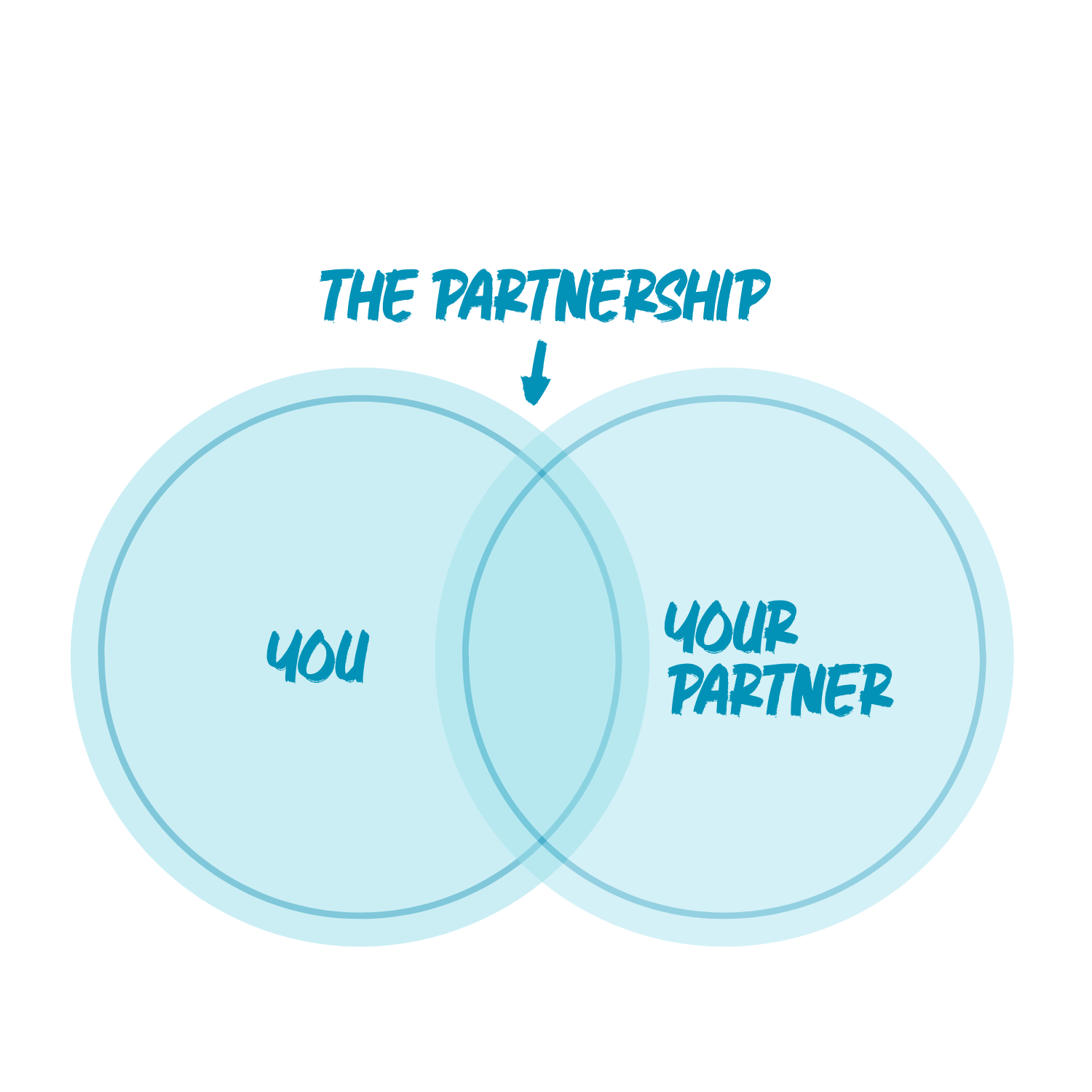
The Third Thing
“Our work together helped steer us toward greater clarity and into inspired action.
We made the tough but important decisions needed to give us more runway.”
- Trish P, Co-Founder Everful
There are three parties in every founding partnership. You. Your partner. And the third thing - the partnership itself.
You work on yourself. You work on the business. Who is working on the partnership?
It is the one thing everything else rests on, and the one thing nobody is assigned to. We work with it directly. Not with you separately, not with your partner separately, but with what exists between you.

Why it Matters.
Your partnership is one of the most valuable things you can build. Take the time to think about and agree on how you will actually work together.
The research on business partnerships is clear. Harvard Business School professor Noam Wasserman studied 10,000 founders and found that 65% of high-potential startups fail because of conflict between co-founders.
Misaligned expectations, unspoken resentments, and poor conflict habits erode partnerships. The cost of a partnership breaking is more than just financial, it’s the loss of someone you once trusted enough to build with.
Most co-founders know this intellectually. Few create the structured space to do something about it. People Lab’s Partnership Fieldwork is that space.
The Process

CLARIFY
What is currently shaping your partnership and where it is headed?

REFLECT
What are the patterns, differences and assumptions.

BUILD
Create shared agreements that fit how you want to work together.

CLARIFY
How to maintain and evolve those commitments as the partnership evolves.
What changes with the work.
Over our work together, we will explore what you value as individuals, and as a partnership, how you communicate and make decisions. The goal of the work is to talk about what is currently unspoken and assumed and bring it to the surface. It may never feel like the right time to do this work, especially as early-stage founders. Ideally, we do this work before your partnership is under stress, as a proactive resource for those inevitable times when challenges surface. However, it can be incredibly valuable as a tool when your partnership is feeling challenging.
While leaving with a Field Guide to your partnership is a powerful record of our work together, it is secondary to the conversations and relational exploration we will do together.
Common Questions
Do we need to be having problems to do this work?
The partners who benefit most often come in when things are going reasonably well and they want to keep it that way. Addressing things that have been left implicit is much easier before they become sources of tension.
What if we have very different working styles?
Different working styles are usually the point. Partnership Foundations helps you understand those differences clearly and build agreements that work for both of you rather than assuming alignment that may not be there.
Can we do this if we are already in conflict?
Yes, though the work looks slightly different. If there is significant tension in the partnership already, the scoping conversation is the right place to understand what is happening and whether Partnership Foundations is the right starting point or whether something else is needed first.
What is a Partnership Agreement?
A Partnership Field Guide is a living, working agreement covering how you operate together. Decision-making authority, communication norms, conflict navigation, feedback practices, and what each partner needs to sustain the relationship over time. Think of it as a practical reference rather than a legal document. Something that gives you a shared starting point when things get complicated.
Quarterly check-ins keep the foundation solid as the business and the partnership evolve. These are shorter sessions, typically 90 minutes, focused on what has shifted since the last conversation and what needs attention. Additional sessions are available if something significant comes up between check-ins.